
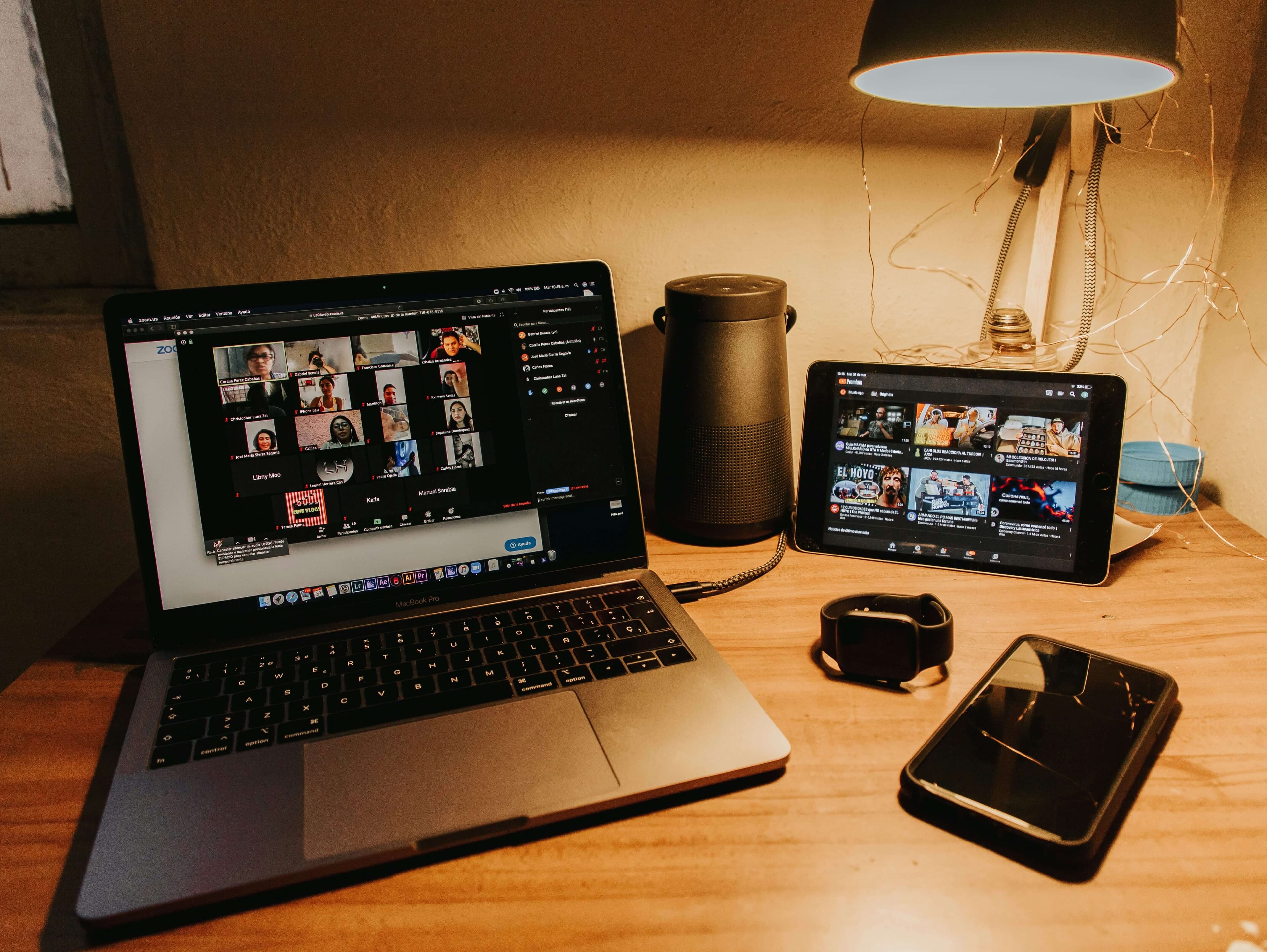
It's 7:05pm. A few people are already on the call. One person's fixing their headphones. Someone asks "what are we playing?" Another's staring at the chat, waiting for instructions.
This is the moment a virtual game night is made or lost.
The best online game nights aren't built around one complicated game. They have a welcoming start, a host who keeps things moving, and a few short rounds that let different personalities shine. One friend's great with music. Someone else is quietly brilliant at word puzzles. Another becomes unexpectedly convincing the second they have to bluff.
Here's how to curate a virtual game night that feels like a real hangout, not a meeting with an activity bolted on.
What makes a virtual game night work
A good virtual session comes down to five basics.
- One clear joining instruction. Nobody should need to download software, create an account, or go hunting for the link.
- A shared main screen. The group needs somewhere to look together, whether that's a Zoom, Google Meet, or Teams window.
- A short first round. Start with something everyone understands immediately.
- A mix of game styles. Alternate between quick individual rounds, social games, and team play.
- A host who protects the pace. Someone who explains the next game fast, celebrates a close round, and moves on before the energy has a chance to drop.
Choose a format that suits your people
Friends and family
Lean into games that create stories and silliness: Song Association, Word Art, Find the Mole, Two Truths & a Lie, and Charades.
Remote work team
Avoid anything that feels too personal or too performative right at the start. Open with Telepathy, where everyone tries to write what the rest of the call will write, or a quick round of Unscramble or Missing Letter. Then move into a collaborative game like Taboo in teams once people have warmed up.
Community or club
Make the game feel specific to the people on the call. A handful of custom questions about the shared interest, city, or community turns a familiar format into something that feels built just for them.
Football night with friends
Build a custom Trivia deck out of club history, transfer gossip, and moments from this season using the Playground, then let Find the Mole settle who actually knows their football and who's been quietly Googling under the table.
Faith and community gatherings
For a fellowship night or a church small group online, keep it warm rather than competitive. A gentle round of Two Truths & a Lie helps newer members get known, and Social Bingo built around shared milestones or in-jokes gives quieter members an easy way in without putting anyone on the spot.
Remote tech conferences
Between talks or breakout sessions, a fast reset works better than another Q&A. Unscramble or Missing Letter with your own industry terms takes two minutes to run, while Crack the Code suits an audience that already likes solving things. More on running these at scale on the conferences and facilitators pages.
Whichever format fits your group, save the running order as a template once you've got it right, so the next one is a single click rather than a rebuild.
A 75 minute virtual game night run of show
This works for groups of roughly 4 to 20. Adjust the number of rounds rather than trying to squeeze in more activities.
| Time | What happens | Why it works |
|---|---|---|
| 0 to 10 min | Arrival, welcome, and Telepathy | Gives early arrivals something to do, with nothing personal to share |
| 10 to 25 min | Unscramble or Missing Letter | A simple, competitive game gets everyone focused fast |
| 25 to 45 min | Find the Mole | Creates discussion, suspicion, and the moments people quote for weeks |
| 45 to 60 min | Song Association or Word Art | Changes the energy with something louder and less screen focused |
| 60 to 70 min | Taboo or Charades in small teams | Encourages collaboration and gives quieter players a group to lean on |
| 70 to 75 min | Final leaderboard, winner reveal, informal chat | Ends on a moment of celebration instead of an abrupt log off |
The best virtual games by mood
For a fast warm up: Unscramble or Missing Letter
Unscramble and Missing Letter need almost no briefing. A question appears, players answer from their phones, and the score updates instantly. Use them in the first 15 minutes, while people are still settling in.
For an icebreaker: Telepathy, then Concentration
In Telepathy, everyone answers the same prompt in private and tries to match the crowd. In Concentration, the same kind of prompt rewards the rarest answer instead. Both lose nothing over video: everyone types on their own phone, and the answers land together on the shared screen as a word cloud. Run one of each and the call is talking before anyone has been put on the spot. Our post on games like Herd Mentality has 30 prompts to get you started.
For debate: Find the Mole
In Find the Mole, most players get the same secret word, but one player only gets the category. As everyone gives clues, the group has to decide who's bluffing. It's a great middle of the night game, because it makes people talk to each other instead of just submitting answers into the void.
For laughter: Song Association or Word Art
Song Association gives players a word and asks them to sing a lyric that contains it. Word Art asks for a word that matches a creative criterion before time runs out. Neither needs musical talent or a perfect answer. The fun comes from fast thinking and how the room reacts.
For collaboration: Taboo or Charades
For groups above 10, split into small teams. In Taboo, teams describe a target word without using the forbidden terms on screen. In Charades, they act it out instead. Both are a welcome change of pace after a few individual rounds.
Use Neegma as the shared game room
Neegma is built for host led social games, online and in person alike. The host shares one screen over Zoom, Google Meet, or Teams, while players join from their own phone browser through a link or QR code. No player downloads, no player accounts.
The host can run a multi-game session, choose the number of rounds and the pace, publish a hint the moment the room gets stuck, and show a live leaderboard for every game. If someone takes a call, refreshes their browser, or arrives late, they rejoin under the same player name and carry on exactly where they left off.
For a small group, the Free plan is a simple way to start: up to 10 players, all games included, five sessions a month, and 90 minutes per session, forever, at no cost. For a bigger one off online party, the Party Plan is a single payment from £7.99 for 24 hours of unlimited access, and if virtual game night is a standing fixture on your calendar rather than a one off, Pro gives you always on access from £18.99 a month.
Don't want to build the night from scratch either? Browse ready-made templates, including full sessions built by Neegma partners specifically for a night like this, open it, and go straight to hosting. Once you've found a running order your group actually likes, save your own version as a template too, so the next one suits whoever's in the room without any extra planning.
Five host rules that make the night memorable
- Send the call link and start time in advance. A little clarity means people show up ready to play, not confused.
- Ask people to join five minutes early. Drop the game link or QR code in the chat before the first round starts.
- Make the opening game easy. Don't start with anything that needs a long explanation or makes someone perform solo.
- Keep each segment short. Stop while a game still has energy left. People remember wanting one more round far more fondly than they remember one that dragged.
- Leave room for ordinary conversation. The games are there to generate stories, not to fill every single minute.
A virtual game night works when the technology disappears into the background and the people on the call start reacting to each other instead of their screens. Give the group a host, a shared screen, a few good rounds, and a reason to stay for the final leaderboard.
Would rather just show up and play?
We're building our own regular virtual game nights too, a standing way to meet other people who genuinely love playing games together, not just host them. Follow Neegma on Instagram or TikTok to catch the next one.
Try Neegma free · Explore all games · Browse ready-to-host templates